
WELCOME BONUS 300%
UP TO €2000 + 100
FREE SPINS
UP TO €2000 + 100
FREE SPINS
Home → Blackjack
Blackjack at 1Go Casino: Variants, Rules and Payouts
Bonus 100 EUR with 10 percent credit
The 300% welcome bonus up to €2,000 provides a significant bankroll boost for high rollers seeking substantial playing capital at 1Go Casino. This generous offer is complemented by 100 free spins, allowing players to explore slot games without additional financial risk or initial investment. The total potential value reaches €2,000 in bonus funds, which can be utilized across various eligible games within the casino platform.
Tischspiele contribute only 10 percent toward the wagering requirement, making table games like blackjack less efficient for clearing bonus funds compared to slots. Slots count for 100 percent, meaning every euro wagered on them fully reduces the required turnover, whereas blackjack bets require ten times the volume. This discrepancy forces high rollers to strategically balance their gameplay to meet terms efficiently without depleting their bankroll too quickly during the process.
A 100 EUR deposit yields a 300 EUR bonus, totaling 400 EUR in available funds before any wagering begins. To clear this amount under standard conditions, a player must generate 4,000 EUR in turnover if relying solely on table games. This calculation highlights the importance of understanding contribution rates when planning a high-stakes strategy that maximizes the utility of the welcome package.
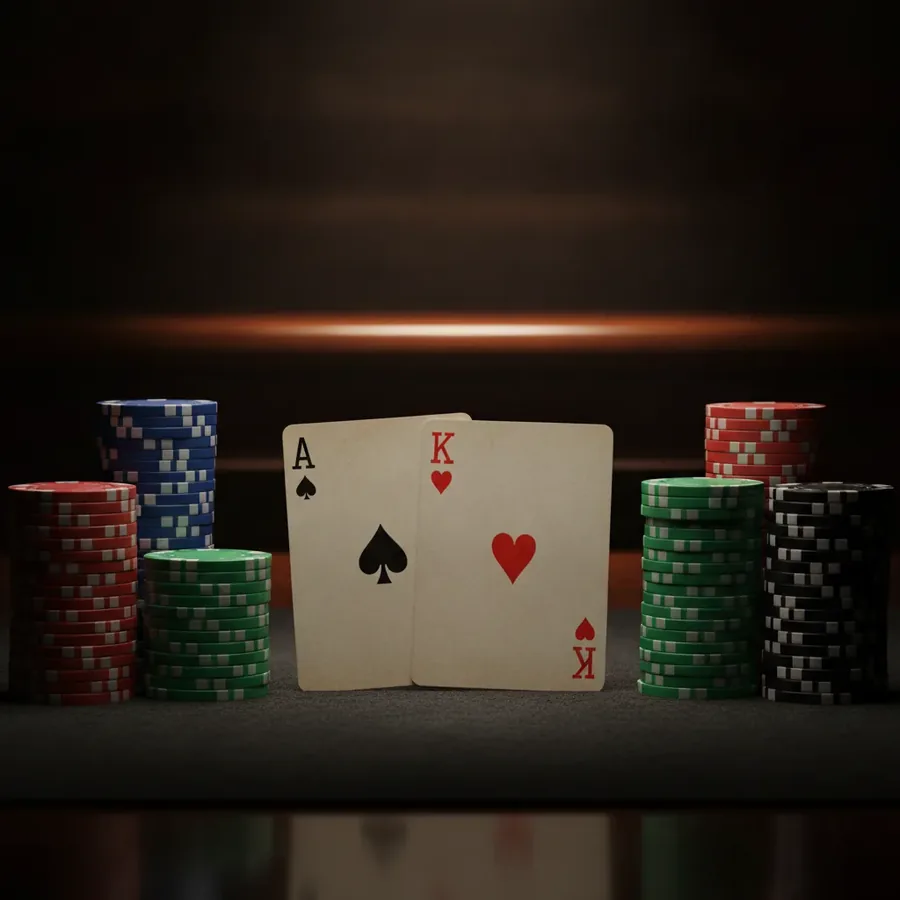
Surrender vs Playing Out on 16 vs 10
Blackjack Surrender (Late Surrender) allows players to forfeit half their bet after the dealer checks for blackjack, reducing the house edge by 0.08 percentage points. This rule significantly improves the Return to Player rate compared to games without surrender options, offering a strategic escape from unfavorable hands against strong dealer upcards. High rollers benefit from this mitigation by limiting losses on statistically weak starting positions.
In contrast, playing out a hard 16 against a dealer 10 typically results in a loss unless the dealer busts, which occurs infrequently. Without the surrender option, the player must accept the full risk of losing the entire stake, whereas surrender caps the damage at exactly 50 percent of the original bet. This distinction is crucial for preserving bankroll integrity during extended high-limit sessions where variance can rapidly deplete funds.
The payout structure for surrender returns 50 percent of the stake immediately, providing immediate relief rather than waiting for the hand resolution. Early surrender, which is worth up to -0.6 percentage points, is far more valuable but extremely rare in modern online casino environments. Most platforms only offer late surrender, which still provides a meaningful advantage over standard rules that forbid this tactical retreat entirely.
Splitting tens costs expected value: better stand
Splitting tens into two separate hands of ten each reduces the overall expected value because a single twenty has a higher probability of winning than two tens. While splitting is allowed up to four hands, keeping the pair together maintains a stronger position against the dealer's final hand total. This basic strategy principle is essential for minimizing the house edge during high-stakes play where every percentage point matters significantly.
The Blackjack Split / Double / H17 variant allows doubling and resplitting, yet splitting tens remains mathematically inferior to standing. Resplitting aces improves the RTP by 0.08 percentage points, but this benefit does not extend to tens, which are already strong starting values. Players who split tens often find themselves facing two weaker hands instead of one dominant hand, increasing the likelihood of eventual loss.
Double After Split (DAS) improves the RTP by approximately 0.14 percentage points, enhancing flexibility for other pairs like eights or fours. However, this rule does not justify splitting tens, as the potential gains from doubling later do not outweigh the immediate loss of equity. Standing on twenty remains the optimal choice, ensuring the highest possible return per hand dealt in the long run.
Dealer Hits Soft 17 (H17) increases the house edge by 0.22 percentage points, making favorable rules even more critical for maintaining an advantage. In such environments, adhering strictly to basic strategy prevents unnecessary errors that could compound the existing disadvantage. High rollers must therefore prioritize rule selection alongside their betting patterns to optimize long-term profitability and reduce volatility effectively.
How many decks are in the shoe?
Using six decks instead of eight reduces the house edge by approximately 0.02 percentage points, offering a marginal but consistent advantage to skilled players. Fewer decks decrease the impact of card removal effects, slightly improving the predictability of future cards drawn from the shoe. This subtle difference accumulates over thousands of hands, providing a measurable benefit for those employing precise betting strategies.
Blackjack Ein Deck offers the lowest house edge at 0.15 percent, with an RTP of 99.85 percent, due to reduced deck penetration effects. However, single-deck games often compensate with unfavorable rules like 6:5 payouts, which negate the inherent advantage of fewer cards. High rollers must verify these compensatory rules to ensure the theoretical benefit translates into actual positive expected value during play.
The Liberal Vegas Strip variant uses multiple decks but achieves a low house edge of 0.28 percent through liberal rule combinations. This includes S17, DAS, resplitting, and late surrender, creating a highly favorable environment despite the presence of multiple decks. Players should compare these aggregate benefits against the slight penalty incurred by using six or eight decks rather than a single deck.
Insurance bets, available in 6–8 deck games, carry a house edge of 7.47 percent and an RTP of 92.53 percent, making them poor value. Even with fewer decks, the insurance wager remains statistically unfavorable for all but advanced card counters with a true count of +3 or higher. Avoiding this side bet preserves the integrity of the main game's expected return, preventing unnecessary erosion of the bankroll.
Seat change at the Live Table in 20 seconds
Infinite Blackjack by Evolution supports unlimited seats at the table, allowing high rollers to join or leave without waiting for a vacancy to open. The minimum bet starts at 1 EUR, while the maximum limit reaches 5,000 EUR, accommodating both casual and serious players simultaneously. This flexibility ensures that seat changes occur instantly, maintaining continuous flow and minimizing downtime between hands.
Lightning Blackjack also features unlimited players and offers multipliers up to 25x on winning hands, adding excitement to the standard gameplay. With limits ranging from 1 to 2,500 EUR, it provides a lower ceiling than Infinite Blackjack but introduces volatile payout opportunities. Seat transitions remain seamless, allowing players to capitalize on lucky streaks without disrupting the ongoing action at the virtual table.
Quantum Blackjack Plus Live by Playtech stands out with multipliers up to 1,000x on three-card combos totaling 21 points, offering massive win potential. Betting ranges from 1 to 5,000 EUR match the highest stakes found in other live dealer offerings, catering specifically to high-roller preferences. The ability to switch seats quickly ensures that players can adapt to table dynamics or seek better multiplier opportunities without delay.
Live tables generally operate with specific RTPs, such as 99.47 percent for Infinite Blackjack and 99.56 percent for Lightning Blackjack, reflecting their unique rule sets. Quantum Blackjack Plus Live boasts an RTP of 99.57 percent under optimal strategy, highlighting the importance of skill in maximizing returns. These figures demonstrate that while seat availability is convenient, game selection based on RTP remains the primary driver of long-term success.
Blackjack variants at a glance
| Variant | Payout | House edge | Rule | Bet range |
|---|---|---|---|---|
| Blackjack Auszahlung 6:5 statt 3:2 (6 Decks) | 98.15% | 1.85% | Ersatz von 3:2 durch 6:5 fügt exakt +1.39 Prozentpunkte zum Vorteil des Casinos hinzu – stärker als jede andere Regeländerung. Bei $10 Einsatz zahlt Blackjack $12 statt $15. | Blackjack 6:5, Gewinn 1:1 |
| Blackjack Surrender (Late Surrender) – Regel-Effekt | n.a. (Regel-Modifikator) | −0.08 Prozentpunkte | Spieler gibt Hand nach Dealer-Blackjack-Prüfung auf, verliert die Hälfte des Einsatzes. Verbessert RTP um ca. 0.08 Prozentpunkte. Early Surrender ist wesentlich wertvoller (bis −0.6 Prozentpunkte), aber extrem selten. | Rückzahlung 50% des Einsatzes |
| Blackjack Ein Deck, klassische Regeln, 3:2 | 99.85% | 0.15% | Weniger Decks = niedrigerer Vorteil; ein Deck gibt ca. −0.48 Prozentpunkte gegenüber 8 Decks. Oft durch 6:5 Auszahlung kompensiert. | Blackjack 3:2, Gewinn 1:1 |
| Blackjack 6 Decks, S17, DAS, DOA, Auszahlung 3:2, Basisstrategie | 99.54% | 0.46% | Dealer steht auf Soft 17; Verdopplung auf jeder Zweierkarte; Verdopplung nach Split erlaubt; keine Aufgabe. Basisstrategie ist für diesen Wert zwingend | Blackjack 3:2, normaler Gewinn 1:1, Insurance 2:1 |
| Blackjack Liberal Vegas Strip (liberale Regeln, 3:2) | 99.72% | 0.28% | Günstigste Regelkombination: S17 + DAS + Resplit + Late Surrender. Standardabweichung 1,15 | Blackjack 3:2, Gewinn 1:1 |
| Blackjack Split / Double / H17 – Regel-Effekte | n.a. (Regel-Modifikatoren) | H17 +0.22 Prozentpunkte; RSA −0.08 Prozentpunkte; DAS −0.14 Prozentpunkte | Dealer Hits Soft 17 verschlechtert RTP um 0.22 Prozentpunkte; Resplit Aces verbessert um 0.08 Prozentpunkte; Double After Split verbessert um ca. 0.14 Prozentpunkte; 6 Decks statt 8 – ca. 0.02 Prozentpunkte. | Double – Einsatz ×2 mit einer Karte; Split – bis 4 Hände; Ass-Split meist mit einer Karte. |
Double Down vs Simple Hit on 11
The Blackjack Liberal Vegas Strip variant offers a house edge of only 0.28%, the most favorable condition for high stakes play among available options. This low margin relies on liberal rules including doubling after splitting and late surrender, which significantly reduce the casino's statistical advantage over skilled players. A professional player utilizing basic strategy can preserve capital more effectively here than at tables with restrictive doubling policies.
Standard Blackjack 6 Decks provides a slightly higher house edge of 0.46% while still allowing doubling on any two cards and after splits. The payout remains at the industry-standard 3:2 for natural blackjacks, ensuring that winning hands yield substantial returns compared to reduced ratios. Players must adhere strictly to basic strategy to maintain this specific mathematical expectation without incurring unnecessary losses.
In contrast, the version paying 6:5 instead of 3:2 increases the house edge to 1.85%, adding exactly 1.39 percentage points to the casino's benefit. On a $10 bet, this rule change results in a $12 payout rather than the expected $15, drastically reducing long-term profitability for high rollers. Such a significant shift makes this variant mathematically inferior despite identical core gameplay mechanics.
Ignored Basic Strategy Chart: 1 Percent Wasted
Adherence to the mandatory basic strategy chart is critical for achieving the 99.54% RTP listed for the standard 6-deck Blackjack game. Deviating from these optimal moves allows the house edge to expand beyond the stated 0.46%, eroding the bankroll through predictable errors. High rollers relying on intuition rather than mathematical precision will see their expected value drop significantly over thousands of hands.
The Infinite Blackjack live table operates with an RTP of 99.47%, requiring similar strategic discipline to maintain near-optimal returns. Evolution Entertainment designs this table with unlimited seats, but the underlying probabilities remain fixed regardless of the number of participants at the felt. Ignoring the correct play for hard totals or pair splitting directly impacts the long-term financial outcome for every individual hand played.
Quantum Blackjack Plus Live maintains a 99.57% RTP when players employ optimal strategy, though it introduces multipliers up to 1,000x for specific three-card combinations. These side bets add volatility but do not replace the need for fundamental blackjack decisions on the main hand. Failing to follow the base strategy chart negates the mathematical advantages provided by the liberal rule set.
Insurance bets carry a steep house edge of 7.47% and should generally be rejected unless counting cards reveals a true count of +3 or higher. Accepting insurance on a regular basis transfers wealth from the player to the casino due to the unfavorable odds inherent in the side wager. This specific deviation from basic strategy represents one of the most costly mistakes a player can make at the table.
Chose Wrong Table for 5 EUR Bankroll
The minimum bet limits at major live providers start at 1 EUR, allowing small bankrolls to survive multiple rounds of play without immediate depletion. Infinite Blackjack by Evolution permits wagers between 1 and 5,000 EUR, offering flexibility for players testing strategies with limited funds. Starting with a 5 EUR stack requires careful bet sizing to withstand the variance inherent in high-stakes environments.
Lightning Blackjack imposes a minimum stake of 1 EUR alongside maximums of 2,500 EUR, integrating random multipliers that can dramatically alter session outcomes. While the entry cost is low, the presence of lightning features increases volatility, meaning a small bankroll may vanish quickly during losing streaks. Players must manage their 5 EUR carefully to avoid busting before hitting a multiplier event.
Quantum Blackjack Plus Live also sets the minimum at 1 EUR, but its unique quantum multipliers apply to specific card combinations rather than standard wins. This structure demands precise bankroll management, as the excitement of potential big wins does not change the underlying house edge of 99.57%. A 5 EUR budget is insufficient for sustained play if bets exceed the minimum frequently due to emotional decision-making.
RNG versions like the 6-deck game offer lower minimums typically found in digital formats, providing a safer environment for tiny bankrolls. However, live tables provide real-time interaction and transparency that many players prefer despite the stricter betting constraints. Understanding the difference between RNG variance and live dealer pacing helps smaller banks allocate their funds more efficiently.
Live Table vs RNG Table: Speed and Limits
Live dealer tables such as Infinite Blackjack operate at a slower pace due to physical card dealing and dealer interaction, limiting the number of hands per hour. With minimum bets starting at 1 EUR and maximums reaching 5,000 EUR, these tables cater to both casual players and high rollers seeking large exposure. The slower speed allows for deeper analysis of each hand but reduces the total volume of action compared to digital alternatives.
RNG games process hundreds of hands per minute, enabling rapid accumulation of turnover and faster resolution of bonus wagering requirements. Slots contribute 100% to wagering, whereas table games like blackjack contribute only 10%, making RNG blackjack less efficient for clearing bonus funds. High rollers often bypass table games for bonuses due to this contribution ratio, preferring slots for faster progression.
High roller limits vary significantly between providers, with Evolution capping Lightning Blackjack at 2,500 EUR and Playtech's Quantum version at 5,000 EUR. These caps define the maximum exposure per hand, influencing bankroll management strategies for those playing with substantial stakes. Digital RNG tables often have no upper limit, allowing unrestricted betting power that live studios cannot physically accommodate.
The choice between live and RNG depends on whether the player prioritizes social interaction and trust in physical dealing over speed and anonymity. Live tables offer transparency but impose time costs, while RNG games provide instant gratification and higher hand volumes. Analyzing personal preferences regarding pace and atmosphere determines the optimal format for extended gaming sessions.
Splitting Eights vs Standing on 16
Basic strategy mandates splitting pairs of eights even when holding a hard 16, as this action reduces the expected loss compared to standing or hitting. Standing on 16 against a dealer's upcard creates a vulnerable position where the player likely loses both the original bet and any subsequent hits. Splitting transforms a losing hand into two separate opportunities to build stronger totals, improving the overall mathematical expectation.
The 6-deck Blackjack variant with 3:2 payouts supports this strategy by allowing resplitting up to four hands, maximizing the utility of split eights. Doubling after split (DAS) further enhances the value of separated hands, giving players additional chances to capitalize on favorable dealer upcards. Deviating from this rule by standing on 16 ignores the structural advantages built into the game's design.
Insurance bets become relevant when the dealer shows an ace, but they do not influence the decision to split eights or stand on 16. The house edge of 7.47% on insurance makes it a poor side bet for most players, reinforcing the need to focus on primary hand management. Correctly executing splits and doubles remains the most effective way to mitigate the house advantage in negative situations.
Liberal rulesets like the Vegas Strip variant improve the outcome of split hands by permitting resplits and late surrender options. Late surrender allows players to forfeit half their bet after the dealer checks for blackjack, providing an exit route for particularly bad hands. Combining surrender with proper splitting strategies creates a robust defense against the house edge in challenging scenarios.
Live stream with three cameras and OCR
Infinite Blackjack from Evolution provides a betting range of 1 to 5,000 EUR for high rollers seeking substantial stakes. The table supports unlimited player seats alongside four specific side bets like Any Pair and Bust It to diversify wagering options. This structure allows large volume betting without the usual seat restrictions found at traditional physical casino tables. The RTP stands at 99.47 percent when players adhere to optimal strategic decisions for the main game.
Lightning Blackjack also operated by Evolution offers a maximum stake limit of 2,500 EUR per hand during live sessions. Unique Lightning Multipliers can apply up to 25x on winning hands, significantly altering the potential payout profile for each round. Players must account for these volatile multipliers when calculating their expected return versus standard blackjack variance rules. The base game maintains an RTP of 99.56 percent despite the added excitement of random multiplier triggers.
Quantum Blackjack Plus Live by Playtech features Quantum Multipliers reaching up to 1,000x on specific three-card combinations totaling 21 points. The betting limits mirror Infinite Blackjack at 1 to 5,000 EUR, accommodating high roller bankroll requirements comfortably. An optimal strategy yields an RTP of 99.57 percent, making it one of the highest returning live variants available today. These high-stakes tables utilize advanced camera setups to ensure transparent dealing procedures for all participants.
How long do 100 EUR last at a 1 EUR table?
Blackjack Insurance is a separate side bet costing up to 50 percent of the main wager if the dealer shows an Ace. For a 1 EUR base bet, this insurance costs 0.50 EUR but carries a steep house edge of 7.47 percent against the player. Accepting this bet reduces the overall return because basic strategy dictates always declining insurance unless counting cards with a True Count greater than or equal to +3.
The base game utilizes six to eight decks which influences the probability of receiving specific card combinations during play. A single deck variant offers a lower house advantage of approximately 5.88 percent for insurance compared to the multi-deck version. High rollers typically avoid this side bet due to its negative expectation, preferring to focus on the main game outcome instead. The insurance payout remains fixed at 2:1 regardless of the number of decks used in the shoe.
Tischspiele contribute only 10 percent toward the wagering requirement of the 300 percent welcome bonus up to 2,000 EUR plus spins. Slots count fully at 100 percent, making table games inefficient for clearing bonus funds efficiently within the allowed timeframe. A 1 EUR bet requires ten times the turnover volume compared to a slot spin to meet the same contribution threshold. This restriction significantly impacts the longevity of a small bankroll when attempting to unlock bonus withdrawals.
Split, Double Down, and Surrender in Numbers
The Liberal Vegas Strip variant offers the most favorable conditions for advanced players through a combination of S17, DAS, Resplit Aces, and Late Surrender. This rule set results in a house edge of just 0.28 percent with a standard deviation of 1.15 for risk assessment. Late Surrender improves the RTP by approximately 0.08 percentage points by allowing players to forfeit half their bet after checking for dealer blackjack. Resplitting Aces further enhances value by allowing additional hands from split aces under strict single-card rules.
Dealer Hits Soft 17 (H17) negatively impacts the player by adding 0.22 percentage points to the house edge compared to standing rules. Conversely, Double After Split (DAS) provides a benefit of roughly 0.14 percentage points by allowing doubling on any hand created via splitting. Resplitting Aces (RSA) offers a modest improvement of 0.08 percentage points, while using six decks instead of eight changes the edge by only 0.02 percentage points. These marginal adjustments accumulate significantly over thousands of hands played at higher stakes levels.
Basic strategy becomes mandatory for maintaining the theoretical RTP of 99.54 percent in a six-deck game with S17 and full double-down rights. The dealer stands on soft seventeen, permitting double downs on any two initial cards and after splits without restriction. Players who deviate from optimal decision-making will inevitably increase the house advantage beyond the stated 0.46 percent baseline. Strict adherence to strategy charts ensures the player achieves the mathematical expectation defined by these specific table rules.
Early Surrender is removed from many tables
Late Surrender permits players to abandon their hand after the dealer checks for blackjack, resulting in a loss of exactly 50 percent of the original wager. This rule improves the player's RTP by approximately 0.08 percentage points compared to games where surrender is completely unavailable. Early Surrender is substantially more valuable, reducing the house edge by up to 0.6 percentage points, but it is now extremely rare in modern online casinos. Most platforms have replaced this generous option with the less beneficial late surrender variant for high stakes tables.
The absence of Early Surrender forces players to rely on other rule modifications like Resplit Aces or Double After Split to mitigate the house advantage. While Late Surrender offers a modest 0.08 percent benefit, missing out on Early Surrender means losing nearly seven times that statistical advantage. High rollers accustomed to land-based luxury tables often find this limitation frustrating when comparing available rule sets across different providers. The shift represents a clear reduction in player-friendly conditions designed to protect the casino's long-term revenue streams.
Standard deviation plays a crucial role in managing bankroll volatility when surrender options are restricted or eliminated from the gameplay matrix. Games without surrender exhibit higher variance because players cannot cut losses on statistically doomed hands early in the round. This increased volatility requires a larger starting bankroll to withstand inevitable downswings during extended playing sessions at high stakes. Players must adjust their betting strategies accordingly to account for the reduced flexibility in exiting unfavorable situations quickly.
What a Natural Blackjack Practically Pays Out
A natural blackjack paying 3:2 returns 150 EUR on a 100 EUR wager, providing a significant boost to the player's bankroll during winning streaks. This favorable payout structure contributes to the low house edge seen in premium variants like the single-deck game offering a 99.85 percent RTP. The single-deck format itself improves odds by roughly 0.48 percentage points compared to eight-deck shoes, assuming identical other rules apply. Players prioritizing mathematical efficiency should actively seek tables maintaining this traditional 3:2 payout ratio exclusively.
Tables offering 6:5 payouts on natural blackjacks reduce the return on a 100 EUR wager to only 120 EUR, creating a massive disadvantage for the player. This specific rule change adds exactly 1.39 percentage points to the house edge, which is more detrimental than any other rule modification available in standard blackjack. The resulting RTP drops to 98.15 percent, making these tables highly undesirable for serious high rollers seeking optimal returns. The difference between 150 EUR and 120 EUR represents a critical financial gap that erodes long-term profitability significantly.
Regular wins in blackjack pay out at even money, or 1:1, regardless of whether the player receives a natural twenty-one or a standard winning hand. Insurance bets pay 2:1 but carry a high house edge of 7.47 percent, making them mathematically unsound for most strategic approaches. The combination of 3:2 naturals and 1:1 regular wins defines the core payout structure that players evaluate before sitting down at any table. Understanding these distinct payout tiers is essential for calculating true expected value across different game variants.
Contact
Live - online chat
Banking









Providers












1Go Casino 2026